


Tuesday, April 7, 2026 | 7:00pm PT
Allergic: When the Body Misreads the World
Theresa MacPhail, PhD
Registration Now Open
Attendance is Complimentary. Registration is Required.


From hay fever to eczema to peanuts, allergies have become dramatically more common over the past half century. Scientists, doctors, and patients are all asking the same question: What exactly is happening inside our bodies, and why now?
In this Spark Salon, medical anthropologist and author Theresa MacPhail explores the global rise of allergic disease and what it reveals about the complex relationship between our bodies and the environments we inhabit. Drawing from her book Allergic: Our Irritated Bodies in a Changing World, she traces the history and science of allergies and the many theories researchers are investigating to explain their rapid increase.
Allergic reactions occur when the immune system identifies something harmless in the environment such as pollen, food proteins, or dust as a threat. That mistaken classification can trigger powerful and sometimes dangerous responses.
Understanding allergies therefore requires understanding how the body interprets signals from the world around it. Our immune systems are constantly evaluating what is safe and what is dangerous. When that system becomes overly sensitive or miscalibrated, everyday substances can be experienced as threats.
By exploring the mystery of allergies, MacPhail offers a fascinating window into how our bodies interact with the environments we live in and how those interactions shape health in ways scientists are still trying to understand.
6:00 p.m.: Doors open, reception
7:00 p.m.: Program begins promptly
8:00 p.m.: Book signing and reception
In-person attendees will receive a complimentary book.
Bio
Theresa MacPhail is driven by a curiosity about our bodies, our world, and the myriad unconscious conversations that take place between them. A medical anthropologist, former journalist, and professor with a background in global health, biomedicine, and disease, she blends her research with philosophy, history, and social sciences to make sense of our present moment. In her fascinating talks that touch on everything from the relationship between global and local health to the importance of failure, she brings lessons from the classroom and her research to a wide range of audiences, from college students to corporations.
For Theresa MacPhail’s new book, Allergic: Our Irritated Bodies in a Changing World, she set out to unravel the mystery of why the number of people diagnosed with allergies has been steadily increasing over the past half century, placing a growing medical burden on individuals, communities, families, and our health care system. A holistic and historical examination of allergies, Allergic spans their first medical description in 1819 to recent innovations. Along the way, MacPhail makes surprising discoveries and connections between climate change, pollution, and biologists that underscore how interconnected our bodies are to our environments.
In addition to her research on epidemics and allergies, MacPhail talks about our wider societal relationship with “unknowledge” and failure. In persuasive lectures, she explains that people don’t understand that science is just as much about what we don’t know as what we do. She explores the link between misinformation, mistrust, and the public’s lack of comfort with the level of uncertainty that scientific inquiry requires, arguing not only that the public needs to learn how to be more comfortable with uncertainty, but also that scientists need to get better at admitting what they don’t know.
As a college professor, MacPhail also has witnessed a rise in anxiety and depression among her students, which she credits to their crippling fear of failure. Too often, students are told that they should learn from their failures, but they don’t know how. In her “Failure 101” course and talks aimed at audiences of all ages, MacPhail normalizes failure by talking about historic, relationship, and business failures and concepts like groupthink and growth vs. fixed mindset.
Theresa MacPhail is an Associate Professor of Science and Technology Studies at Stevens Institute of Technology in Hoboken, New Jersey. She earned PhDs from the University of California, Berkeley, and the University of California, San Francisco. In addition to Allergic, her writing has appeared in Slate and Los Angeles Review of Books, and her academic work has been published in Public Culture, Limn, and Expertise: Cultures and Technologies of Knowledge. MacPhail is currently working on her next book, which dives into what happens to our minds and bodies as we age and why acceptance of aging is the key to “aging well.” She lives in Brooklyn, New York.
For more information on Speaker, please visit www.prhspeakers.com.
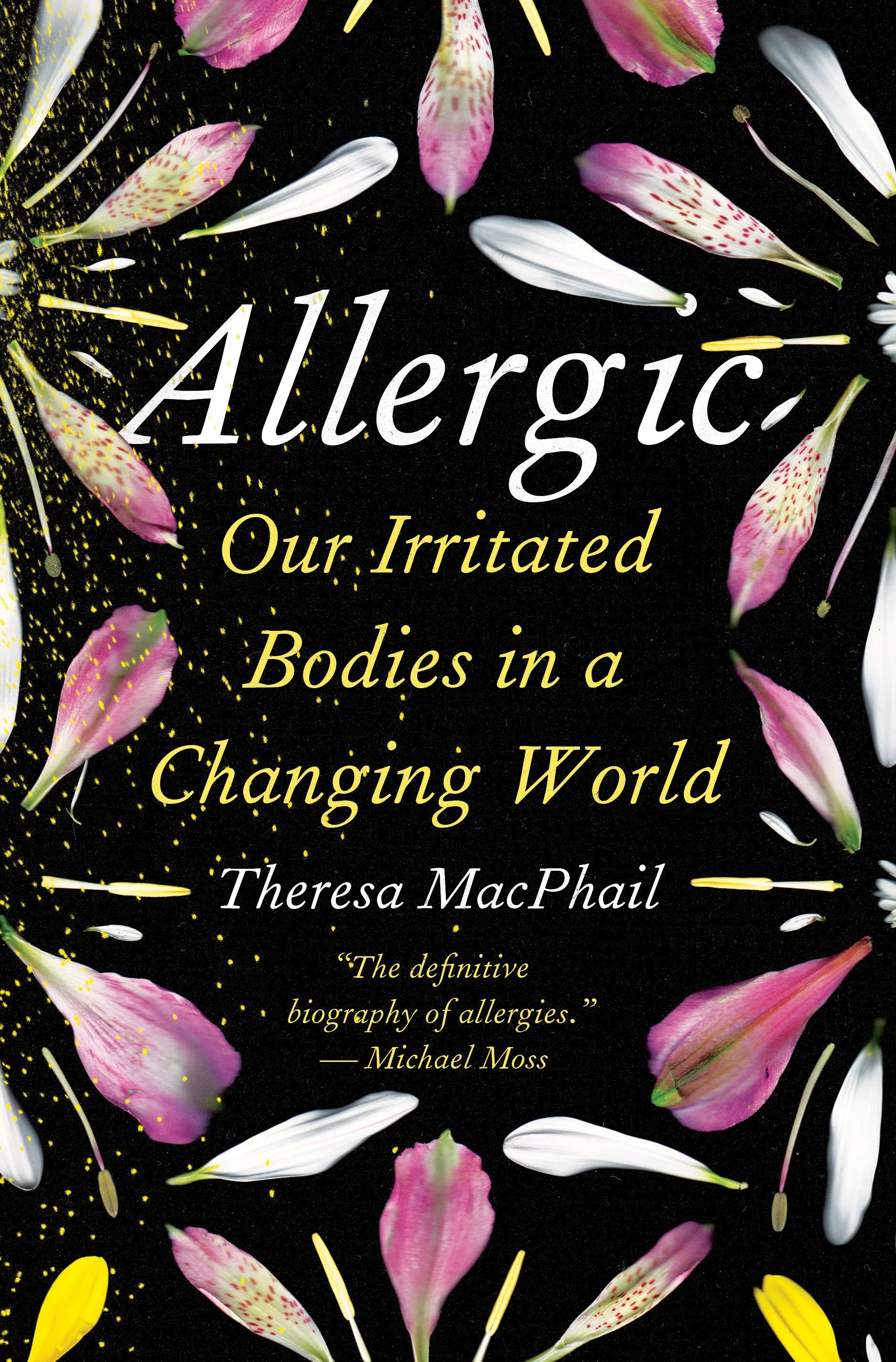
Allergic: Our Irritated Bodies in a Changing World
Now available at: